The following information was inadvertently left out of the last issue of eRISEN:
Sesquicentennial Organ Concert
When: November 18, 2007, 3 p.m.
Where: Saint John's Episcopal Church (Ashton), 1505 Mendon Road, Cumberland, RI
Additional Info: As part of our Sesquicentennial Celebration, this concert will feature Mr. Jack Cook, Saint John’s Organist and Music Director, performing on the church’s recently-restored 1919 Austin organ. Also appearing will be Mr. Paul Pelletier, violinist, and, for the first-time ever in concert, the Saint John’s Choir. Admission is free. Please join us for a delightful afternoon of music. Doors open at 2:15 p.m.
Contact: Paul Bousquet, 401-658-4591, pbousquet@cox.net
Monday, November 12

2007 Convention Address
217th Convention of the Diocese of Rhode Island
27 October 2007
Address to Convention
The Right Reverend Geralyn Wolf
“My soul proclaims the greatness of the Lord; my spirit rejoices in God my savior.”
So sang the Blessed Virgin Mary in response to the greeting from her cousin Elizabeth. Mary was filled with joy and praised God from a full and generous heart. So, I join with Mary in singing a song of joy in thanksgiving to God who brought Thomas Bair into my life, and for all of you who have showered us with your blessings and best wishes. However, unlike Elizabeth I’m happy to say, there is no babe-a-leaping!
The theme for this convention is about living a life of hope, a life rooted in Jesus’ death and resurrection. The community of his followers has gathered with elation and thanksgiving, celebrating the mystery of the Pascha for almost two thousand years.
The story of Mary and Elizabeth, liturgically known as the Feast of the Visitation, and the Story of Easter contain elements that are beyond our comprehension. To our way of thinking Mary could not have become pregnant, and like Thomas, some doubt the resurrection. As people formed in a scientific, technological age when something is beyond our grasp, it is easy to question its authenticity. However, Scripture reminds us that with God all things are possible.
Yitzak Perelman, the great violinist, had just begun to play a solo piece when one of the strings of his violin broke. Since it occurred at the beginning of the performance, he could have stopped and put on a new string but he decided to keep playing with the three strings that remained. At the end the audience applauded with gusto. Perelman raised his bow to signal for quiet. “You know,” he said, “sometimes it is the artist’s task to find out how much beautiful music you can make with what you have left.” Instead of focusing on the broken string, he mesmerized his listeners by using the three that remained. What a gift, to make the very best of what you have, with who you are.
Unlike Perelman, vestries often spend endless hours focusing on what is missing. Hope asks us to claim what is ours, even if it’s broken and inadequate, and to offer it faithfully for God’s mission.
Imagine Jesus looking at the 5,000 hungry, tired people and then seeing the meager offerings of two fish and five loaves of bread; not a promising situation. Instead of sending the people away he gave thanks for what he had, broke it in many pieces, and fed them all. When we give our gifts to God and for his purposes, we discover that the impossible is achievable and that hope is revealed through apparent insufficiency.
Michael Ramsey, former Archbishop of Canterbury said, “[The Church] exists to teach men and women to die to self and to trust in a resurrection to new life…”. That is our mission: to break the bread we have, to give it away, and to die to selfish aims and harmful ambitions as we trust in a resurrection to new life. Our diocesan vision statement is, “Live in Christ: Transform the world.” All the parables, all the stories and events portrayed in the Bible, direct us to the breathtaking power of God to transform people and events.
The heart of evangelism is sharing with others how God has been your agent of transformation. Because we are human, it is a story of brokenness leading to healing, of despair finding grace, of going astray and discovering a way home, of losing hope and receiving a new and inspired life. In spite of terrible sins there is forgiveness, and in the depths of heartache, love reaches out and prevails.
There is an old Orthodox legend that says that the Angel Gabriel had been appearing to young women throughout the millennia, serving as God’s messenger, seeking someone to give birth to God’s Word. Gabriel visited hundreds and thousands of young women, and Mary was the first to say “yes.”
The mission of the Church is to give everyone in every condition and culture the opportunity to say “Yes!” Gabriel is the messenger of messengers asking us to join him in proclaiming the glory of God in a culture where many say “No.” Our challenge is to have as much trust in God as Gabriel did, undeterred by negativity, and pressing on to the “yes” of life. Our message is about the transforming power of the Risen Christ to lead people from spiritual fear and defeat to an abundant and confident way of living.
There are many disciplines that assist the seeker in discovering a deeper spirituality. Their common characteristics are that the seeker acknowledges serious personal flaws and shortcomings, better known as sins, recognizes the need for God, and willingly surrenders to God’s care and direction. Congregations need spiritual discipline as well.
My friends, this is what we are talking about: Church as a place for difficult, challenging, growth in the Holy Spirit.
One of the primary ministries of many churches is to create an atmosphere of welcome and hospitality, where everyone is included. I heartily agree. However, our mission goes further. We gather to discover authentic life through the engagement of God’s authentic Word. Everyone is invited into the gathering, but our goal is to be transformed into the way of Jesus. As Christians, we witness to a particular Person, not just any person; to Jesus, the Son of God, the second person of the Holy Trinity, in whom is found salvation and grace, forgiveness and love, and everlasting life. Indeed, we welcome people just as they are, but we don’t expect them to stay that way. In trust we say, “Glory to God whose power working in us can do infinitely more than we can ask or imagine.”
As you review your church budgets and stewardship programs, there may be moments of anxiety. Some of you will try to figure out ways of getting new members to support rising costs. Others will have fund-raisers. I admit that I enjoy immensely parish yard sales (or any yard sale for that matter), bake sales, spaghetti dinners, and May breakfasts. However, many of us are looking for new members in all the old familiar places. In truth we don’t attract many new members through these projects, and we don’t raise much money by today’s standards.
Want to know how to fill up our churches? Begin by letting God set your hearts on fire. “Were not our hearts on fire,” said the apostles on their way to Emmaus. They knew what it was to be in Jesus’ presence even if it took them a little while to figure it out. Has your congregation really known what it means to be in Jesus’ company, and to experience your whole life turned upside down? What would you need in order to step out and take a bold leap of faith in your church? I’ve seen people in our diocese receive a renewed passion for Jesus’ presence: our young adults who visit Taizé each year, people working in missions in Latin America, those who attend conferences with other Christians, the Credo program, and many others who through the complexities of life have come to know the depths of Jesus’ love.
What’s the purpose of your church? Do you know your spiritual goal? Are you able to articulate your mission and ministry and maintain a healthy flexibility? We fool ourselves if we think that our churches are growing across the diocese. The hand-full of our parishes that are growing are those who have embraced significant changes in attitude and outlook. It takes faith and discipline to move the focus from the budget to the Gospel, from a mindset of scarcity to one of abundance, from being spiritually sluggish to being alive in the Lord.
When your hearts are on fire and passion is rekindled, people will want to know what makes you tic. When you exhibit the flame of hope that passes human understanding, people will want to know what’s happening. Lives change through encounters with the God of Hope, shared in the company of others. Through hard, committed work, through passion and joy we become extraordinary witnesses to the gospel and, like Mary, are compelled to run and tell someone.
The fire of the Holy Spirit builds confidence, which leads to a deepening sense of purpose, and a willingness to make sacrifices. It is a flame of passion that does not consume but redirects our whole outlook on life. Ah, but your basket has only five loaves and two fish, what are they amongst so many. The violin has only three strings and you had hoped for four. It really didn’t matter to Jesus, or to Yitzak Perelman, because through their confidence and attitude they had all that was necessary.
Each parish and mission has gifted and wise parishioners, and every church has a special charism. Can you name something in your Church that brings the hope that leads to and transform? Imagine choosing one thing that you do well and exploiting it; discovering every opportunity and technique to reveal the one gift so that it is large and visible, attractive to those who are seeking an authentic Christian community! The primary goal is not to raise money or to increase membership, but to rekindle the spiritual fires you already possess.
The parishes and missions who have chosen to merge with one another often began the project thinking that they did not have enough. Yet in every case they experienced a renewed sense of vitality and mission. Instead of business as usual, they took the risk of putting ministry and mission above security and survival. They learned that church was people and not buildings. They understood their work to be of God’s kingdom and not their own. Instead of losing people, as some feared, these churches have grown.
St. Michael and Grace, Rumford, and St. Martin’s, Pawtucket have become the new Church of the Epiphany. St. George’s Newport, and St. Mary’s, Portsmouth are one in the parish named for St. Mary.
These parishes moved beyond themselves to see the gift instead of the broken string, the blessing within the heartache, the way forward in the midst of distress, the truth that Rhode Islanders can drive an extra mile or two to attend church, and the revelation that you don’t have to sit in the same pew. These faithful people are the ones who reveal to us the power of Christian Hope.
Each of us will have deficiencies until the day we die. Even with a heart of thanksgiving for all that Jesus means to us, we won’t be able to obscure our shortcomings, or the troubles in our churches. We are made in the image of God but we are still human. Our fears and hesitancy will revisit, discord will rear its ugly head, interpersonal struggles will still exist, but we must not focus so heavily upon what is wrong that we miss all the good that counterbalances it. Mistakes are inevitable, but they are healed through forgiveness and love. Christians who are open and honest, who are committed to reconciliation at every turn, become a church that can take faithful risks and endure failure, and begin again.
Our goal is to be better equipped and more intentionally formed in the faith we profess. We have to learn the language of faith intersecting with culture, so that we will proclaim the message of hope with increasing confidence, in an increasingly secular society and global community.
Brian McLaren, in his book Generous Orthodoxy, said, “I seek to better understand Scripture not just for my own sake, but so I’ll be better equipped to serve God and my neighbors.” (p. 119)
As we gather today, members of The Episcopal Church and Anglican Communion are praying for the unity that seems to elude us. This is not the first time that the Church has lost its equilibrium, though it is probably the most dramatic since the Reformation. I pray earnestly for the unity of The Episcopal Church and The Anglican Communion with the hope that we will discover a way to be different together, claiming our essential bonds of unity, and the limits of our autonomy. If my invitation to Lambeth stands, I plan to attend, working for unity in the tension of claiming traditional faith and its contemporary expression.
Hail Mary full of Grace the Lord is with you. Hail Sudanese children, hail governors and senators, and day workers, and immigrants, and teachers; hail to all of you for you are all full of grace. To every corner of the world and in times and places of despair, we must know that in God’s eyes all are full of grace, even the most desperate among us. Today, Gabriel wanders about the universe, seeking people who say “Yes,” to God’s call. It is the poor who are answering “yes” with generous vitality. It is the hungry and destitute who have found the grace of faith. So many in our country seem to be saying, “No”, so let us join courageously with Gabriel the great archangel, reaching out to people everywhere creating opportunity to encounter the living Christ.
In summary, my friends, focus on what you do well, knowing that no one person or group can do everything. Witness from your strengths, it will restore your energy. Open your heart to hope and gratitude and overcome the pettiness that is so detrimental to Christian life. Move from familiar responses to a fresh and vivid way of being Church.
None of us can do these things alone. We need each other to reveal the love of God. Use your diocesan staff as a resource. Call upon parishes in the diocese to help you. Contact churches that have come through challenging times and discover how they did it. Join with one another knowing that you are not as different as you may think, and discover the uniting bonds of our brother Jesus.
I am so grateful for the good spirit that is evident in our diocese; the increasing collegiality amongst our clergy, the success of parish mergers, the young adults who are being considered for diocesan positions here at this convention; these gifts bring hope to all of us. I am grateful for Canon Bob Vanderau, for his gentle and dedicated service, and for Jim Segovis whose term as Vice-President of Diocesan Council brought new directions to our common life. I look forward to a new configuration of my wonderful staff, and in welcoming Liz Crawley to take her part as my new Executive Assistant. I’m grateful to Ty Creason and Betsy Fornal for their wholehearted willingness to take on new and expanded ministries. Their competence and dedication are a blessing to all of us.
In just a few minutes we will offer and give thanks for ordinary creatures of bread and wine, and through God’s grace, they will become our spiritual food and drink: Christ’s Real and Sacred Presence. So, we approach this Gift with profound reverence and thanksgiving for the One who forgives our sins and meets us in complete, sacrificial love. And in that love our souls join with Mary and magnify the greatness of the Lord.
27 October 2007
Address to Convention
The Right Reverend Geralyn Wolf
“My soul proclaims the greatness of the Lord; my spirit rejoices in God my savior.”
So sang the Blessed Virgin Mary in response to the greeting from her cousin Elizabeth. Mary was filled with joy and praised God from a full and generous heart. So, I join with Mary in singing a song of joy in thanksgiving to God who brought Thomas Bair into my life, and for all of you who have showered us with your blessings and best wishes. However, unlike Elizabeth I’m happy to say, there is no babe-a-leaping!
The theme for this convention is about living a life of hope, a life rooted in Jesus’ death and resurrection. The community of his followers has gathered with elation and thanksgiving, celebrating the mystery of the Pascha for almost two thousand years.
The story of Mary and Elizabeth, liturgically known as the Feast of the Visitation, and the Story of Easter contain elements that are beyond our comprehension. To our way of thinking Mary could not have become pregnant, and like Thomas, some doubt the resurrection. As people formed in a scientific, technological age when something is beyond our grasp, it is easy to question its authenticity. However, Scripture reminds us that with God all things are possible.
Yitzak Perelman, the great violinist, had just begun to play a solo piece when one of the strings of his violin broke. Since it occurred at the beginning of the performance, he could have stopped and put on a new string but he decided to keep playing with the three strings that remained. At the end the audience applauded with gusto. Perelman raised his bow to signal for quiet. “You know,” he said, “sometimes it is the artist’s task to find out how much beautiful music you can make with what you have left.” Instead of focusing on the broken string, he mesmerized his listeners by using the three that remained. What a gift, to make the very best of what you have, with who you are.
Unlike Perelman, vestries often spend endless hours focusing on what is missing. Hope asks us to claim what is ours, even if it’s broken and inadequate, and to offer it faithfully for God’s mission.
Imagine Jesus looking at the 5,000 hungry, tired people and then seeing the meager offerings of two fish and five loaves of bread; not a promising situation. Instead of sending the people away he gave thanks for what he had, broke it in many pieces, and fed them all. When we give our gifts to God and for his purposes, we discover that the impossible is achievable and that hope is revealed through apparent insufficiency.
Michael Ramsey, former Archbishop of Canterbury said, “[The Church] exists to teach men and women to die to self and to trust in a resurrection to new life…”. That is our mission: to break the bread we have, to give it away, and to die to selfish aims and harmful ambitions as we trust in a resurrection to new life. Our diocesan vision statement is, “Live in Christ: Transform the world.” All the parables, all the stories and events portrayed in the Bible, direct us to the breathtaking power of God to transform people and events.
The heart of evangelism is sharing with others how God has been your agent of transformation. Because we are human, it is a story of brokenness leading to healing, of despair finding grace, of going astray and discovering a way home, of losing hope and receiving a new and inspired life. In spite of terrible sins there is forgiveness, and in the depths of heartache, love reaches out and prevails.
There is an old Orthodox legend that says that the Angel Gabriel had been appearing to young women throughout the millennia, serving as God’s messenger, seeking someone to give birth to God’s Word. Gabriel visited hundreds and thousands of young women, and Mary was the first to say “yes.”
The mission of the Church is to give everyone in every condition and culture the opportunity to say “Yes!” Gabriel is the messenger of messengers asking us to join him in proclaiming the glory of God in a culture where many say “No.” Our challenge is to have as much trust in God as Gabriel did, undeterred by negativity, and pressing on to the “yes” of life. Our message is about the transforming power of the Risen Christ to lead people from spiritual fear and defeat to an abundant and confident way of living.
There are many disciplines that assist the seeker in discovering a deeper spirituality. Their common characteristics are that the seeker acknowledges serious personal flaws and shortcomings, better known as sins, recognizes the need for God, and willingly surrenders to God’s care and direction. Congregations need spiritual discipline as well.
My friends, this is what we are talking about: Church as a place for difficult, challenging, growth in the Holy Spirit.
One of the primary ministries of many churches is to create an atmosphere of welcome and hospitality, where everyone is included. I heartily agree. However, our mission goes further. We gather to discover authentic life through the engagement of God’s authentic Word. Everyone is invited into the gathering, but our goal is to be transformed into the way of Jesus. As Christians, we witness to a particular Person, not just any person; to Jesus, the Son of God, the second person of the Holy Trinity, in whom is found salvation and grace, forgiveness and love, and everlasting life. Indeed, we welcome people just as they are, but we don’t expect them to stay that way. In trust we say, “Glory to God whose power working in us can do infinitely more than we can ask or imagine.”
As you review your church budgets and stewardship programs, there may be moments of anxiety. Some of you will try to figure out ways of getting new members to support rising costs. Others will have fund-raisers. I admit that I enjoy immensely parish yard sales (or any yard sale for that matter), bake sales, spaghetti dinners, and May breakfasts. However, many of us are looking for new members in all the old familiar places. In truth we don’t attract many new members through these projects, and we don’t raise much money by today’s standards.
Want to know how to fill up our churches? Begin by letting God set your hearts on fire. “Were not our hearts on fire,” said the apostles on their way to Emmaus. They knew what it was to be in Jesus’ presence even if it took them a little while to figure it out. Has your congregation really known what it means to be in Jesus’ company, and to experience your whole life turned upside down? What would you need in order to step out and take a bold leap of faith in your church? I’ve seen people in our diocese receive a renewed passion for Jesus’ presence: our young adults who visit Taizé each year, people working in missions in Latin America, those who attend conferences with other Christians, the Credo program, and many others who through the complexities of life have come to know the depths of Jesus’ love.
What’s the purpose of your church? Do you know your spiritual goal? Are you able to articulate your mission and ministry and maintain a healthy flexibility? We fool ourselves if we think that our churches are growing across the diocese. The hand-full of our parishes that are growing are those who have embraced significant changes in attitude and outlook. It takes faith and discipline to move the focus from the budget to the Gospel, from a mindset of scarcity to one of abundance, from being spiritually sluggish to being alive in the Lord.
When your hearts are on fire and passion is rekindled, people will want to know what makes you tic. When you exhibit the flame of hope that passes human understanding, people will want to know what’s happening. Lives change through encounters with the God of Hope, shared in the company of others. Through hard, committed work, through passion and joy we become extraordinary witnesses to the gospel and, like Mary, are compelled to run and tell someone.
The fire of the Holy Spirit builds confidence, which leads to a deepening sense of purpose, and a willingness to make sacrifices. It is a flame of passion that does not consume but redirects our whole outlook on life. Ah, but your basket has only five loaves and two fish, what are they amongst so many. The violin has only three strings and you had hoped for four. It really didn’t matter to Jesus, or to Yitzak Perelman, because through their confidence and attitude they had all that was necessary.
Each parish and mission has gifted and wise parishioners, and every church has a special charism. Can you name something in your Church that brings the hope that leads to and transform? Imagine choosing one thing that you do well and exploiting it; discovering every opportunity and technique to reveal the one gift so that it is large and visible, attractive to those who are seeking an authentic Christian community! The primary goal is not to raise money or to increase membership, but to rekindle the spiritual fires you already possess.
The parishes and missions who have chosen to merge with one another often began the project thinking that they did not have enough. Yet in every case they experienced a renewed sense of vitality and mission. Instead of business as usual, they took the risk of putting ministry and mission above security and survival. They learned that church was people and not buildings. They understood their work to be of God’s kingdom and not their own. Instead of losing people, as some feared, these churches have grown.
St. Michael and Grace, Rumford, and St. Martin’s, Pawtucket have become the new Church of the Epiphany. St. George’s Newport, and St. Mary’s, Portsmouth are one in the parish named for St. Mary.
These parishes moved beyond themselves to see the gift instead of the broken string, the blessing within the heartache, the way forward in the midst of distress, the truth that Rhode Islanders can drive an extra mile or two to attend church, and the revelation that you don’t have to sit in the same pew. These faithful people are the ones who reveal to us the power of Christian Hope.
Each of us will have deficiencies until the day we die. Even with a heart of thanksgiving for all that Jesus means to us, we won’t be able to obscure our shortcomings, or the troubles in our churches. We are made in the image of God but we are still human. Our fears and hesitancy will revisit, discord will rear its ugly head, interpersonal struggles will still exist, but we must not focus so heavily upon what is wrong that we miss all the good that counterbalances it. Mistakes are inevitable, but they are healed through forgiveness and love. Christians who are open and honest, who are committed to reconciliation at every turn, become a church that can take faithful risks and endure failure, and begin again.
Our goal is to be better equipped and more intentionally formed in the faith we profess. We have to learn the language of faith intersecting with culture, so that we will proclaim the message of hope with increasing confidence, in an increasingly secular society and global community.
Brian McLaren, in his book Generous Orthodoxy, said, “I seek to better understand Scripture not just for my own sake, but so I’ll be better equipped to serve God and my neighbors.” (p. 119)
As we gather today, members of The Episcopal Church and Anglican Communion are praying for the unity that seems to elude us. This is not the first time that the Church has lost its equilibrium, though it is probably the most dramatic since the Reformation. I pray earnestly for the unity of The Episcopal Church and The Anglican Communion with the hope that we will discover a way to be different together, claiming our essential bonds of unity, and the limits of our autonomy. If my invitation to Lambeth stands, I plan to attend, working for unity in the tension of claiming traditional faith and its contemporary expression.
Hail Mary full of Grace the Lord is with you. Hail Sudanese children, hail governors and senators, and day workers, and immigrants, and teachers; hail to all of you for you are all full of grace. To every corner of the world and in times and places of despair, we must know that in God’s eyes all are full of grace, even the most desperate among us. Today, Gabriel wanders about the universe, seeking people who say “Yes,” to God’s call. It is the poor who are answering “yes” with generous vitality. It is the hungry and destitute who have found the grace of faith. So many in our country seem to be saying, “No”, so let us join courageously with Gabriel the great archangel, reaching out to people everywhere creating opportunity to encounter the living Christ.
In summary, my friends, focus on what you do well, knowing that no one person or group can do everything. Witness from your strengths, it will restore your energy. Open your heart to hope and gratitude and overcome the pettiness that is so detrimental to Christian life. Move from familiar responses to a fresh and vivid way of being Church.
None of us can do these things alone. We need each other to reveal the love of God. Use your diocesan staff as a resource. Call upon parishes in the diocese to help you. Contact churches that have come through challenging times and discover how they did it. Join with one another knowing that you are not as different as you may think, and discover the uniting bonds of our brother Jesus.
I am so grateful for the good spirit that is evident in our diocese; the increasing collegiality amongst our clergy, the success of parish mergers, the young adults who are being considered for diocesan positions here at this convention; these gifts bring hope to all of us. I am grateful for Canon Bob Vanderau, for his gentle and dedicated service, and for Jim Segovis whose term as Vice-President of Diocesan Council brought new directions to our common life. I look forward to a new configuration of my wonderful staff, and in welcoming Liz Crawley to take her part as my new Executive Assistant. I’m grateful to Ty Creason and Betsy Fornal for their wholehearted willingness to take on new and expanded ministries. Their competence and dedication are a blessing to all of us.
In just a few minutes we will offer and give thanks for ordinary creatures of bread and wine, and through God’s grace, they will become our spiritual food and drink: Christ’s Real and Sacred Presence. So, we approach this Gift with profound reverence and thanksgiving for the One who forgives our sins and meets us in complete, sacrificial love. And in that love our souls join with Mary and magnify the greatness of the Lord.
Tuesday, October 2
Former Archbishop of Canterbury to be in RI
 The Most Rev'd George Carey, former Archbishop of Canterbury, will be coming to St. Paul’s, Wickford, October 19 – 23. You’re welcome to join him for these events.
Saturday, October 20
5:15 pm – Informal Eucharist – Sermon: “What in the World Does God Want From Us Anyway?” @ St. Paul’s Church, N. Kingstown
7: 30 pm -- Speech: “How to be Spiritual Without Necessarily Being Very Religious” @ St. Paul’s Church, N. Kingstown
Sunday, October 21
8:30 & 11:00 a.m. Eucharist – Sermon: “What in the World Does God Want from Us Anyway?” @ St. Paul’s Church, N. Kingstown
10 – 11 am -- Speech: “What in the World is God up to these Days?” @ St. Paul’s Parish Hall
(What seems to be happening in the world these days and how is God involved? How does God want us to be involved?)
Evening –Talk at St. Matthew’s Church Jamestown Island (Kevin Lloyd, Rector) – “Are Islam and Christian Destined to be in Conflict” St. Matthew’s, Jamestown
Monday, October 22
7:30 pm – Talk: “How to be Infectious Christians in a Culture Immunized Against It?” @ St. Paul’s Parish Hall
For further information contact St. Paul’s Church: 401-294-4357.
Friday, September 28
Bishop Wolf on the House of Bishops' Meeting
Dear Friends,
By now you may have read the various web-site and media reports regarding the House of Bishops' meeting in New Orleans. When read as a whole they portray a rich glimpse of our deliberations.
The highlights of the meeting, for me, were the reflections of Archbishop Rowan, the addresses from the four members of the Joint Standing Committee, the presentation by Bishop Jeffrey Steenson on his renunciation of orders, and our work day in the city.
The addresses from our Anglican partners were at times painful to hear. As they shared the spiritual and political shape of their dioceses, a sobering spirit descended upon the room. Each in turn, expressed sincere gratitude for the gifts that we have shared in Communion, and the continuing generosity of our Province. On several occasions we were reminded, "Your country and your Church have so much, and to those to whom much has been given, much is expected."
On more than one occasion we were reminded of our political power in the world arena, and how we wield it with little concern for others. One person reminded us that we infiltrate long-standing cultural norms through television, movies, internet, fast food restaurants, cigarettes; securing profits while compromising the fabric of other societies. Many contend that The Episcopal Church is doing the same.
Most of us were humbled by the comments, others thought they were too accusatory.
The process for addressing the issues before us: consent to non-celibate gays and lesbians to the episcopate, and the blessing of same-sex unions, was challenging in its own right. We tried to by-pass legislative action on resolutions, saving a vote for the final message from the House. It's a good idea in theory, but was quite cumbersome in practice.
The democratic process in which majorities make the ultimate decisions, was called into question when dealing with theology and global relationships. The call to honor dissident voices was strong, as I suspect that at times each one thought that their position was in the minority.
Most would agree that the final result was the best that we could do as a group.
Please come and share your thoughts, concerns, questions, Saturday morning, 9-11AM at the Cathedral. Your friends and parishioners are invited, as well. This will help me in hearing the mood of the diocese, and clarifying concerns you may have, to the best of my ability. Doors open at 8:30, with light breakfast offerings.
Thank you for all your prayers, and for the very civilized manner in which we have been able to discuss these concerns over the years. By the grace of God there is respect and kindness, sadness mixed with joy, and a secure, safe place to engage with each other. It only happens because all of you make it so. I am very grateful.
+GW
By now you may have read the various web-site and media reports regarding the House of Bishops' meeting in New Orleans. When read as a whole they portray a rich glimpse of our deliberations.
The highlights of the meeting, for me, were the reflections of Archbishop Rowan, the addresses from the four members of the Joint Standing Committee, the presentation by Bishop Jeffrey Steenson on his renunciation of orders, and our work day in the city.
The addresses from our Anglican partners were at times painful to hear. As they shared the spiritual and political shape of their dioceses, a sobering spirit descended upon the room. Each in turn, expressed sincere gratitude for the gifts that we have shared in Communion, and the continuing generosity of our Province. On several occasions we were reminded, "Your country and your Church have so much, and to those to whom much has been given, much is expected."
On more than one occasion we were reminded of our political power in the world arena, and how we wield it with little concern for others. One person reminded us that we infiltrate long-standing cultural norms through television, movies, internet, fast food restaurants, cigarettes; securing profits while compromising the fabric of other societies. Many contend that The Episcopal Church is doing the same.
Most of us were humbled by the comments, others thought they were too accusatory.
The process for addressing the issues before us: consent to non-celibate gays and lesbians to the episcopate, and the blessing of same-sex unions, was challenging in its own right. We tried to by-pass legislative action on resolutions, saving a vote for the final message from the House. It's a good idea in theory, but was quite cumbersome in practice.
The democratic process in which majorities make the ultimate decisions, was called into question when dealing with theology and global relationships. The call to honor dissident voices was strong, as I suspect that at times each one thought that their position was in the minority.
Most would agree that the final result was the best that we could do as a group.
Please come and share your thoughts, concerns, questions, Saturday morning, 9-11AM at the Cathedral. Your friends and parishioners are invited, as well. This will help me in hearing the mood of the diocese, and clarifying concerns you may have, to the best of my ability. Doors open at 8:30, with light breakfast offerings.
Thank you for all your prayers, and for the very civilized manner in which we have been able to discuss these concerns over the years. By the grace of God there is respect and kindness, sadness mixed with joy, and a secure, safe place to engage with each other. It only happens because all of you make it so. I am very grateful.
+GW
Friday, September 21
Ten ways Jesus showed love
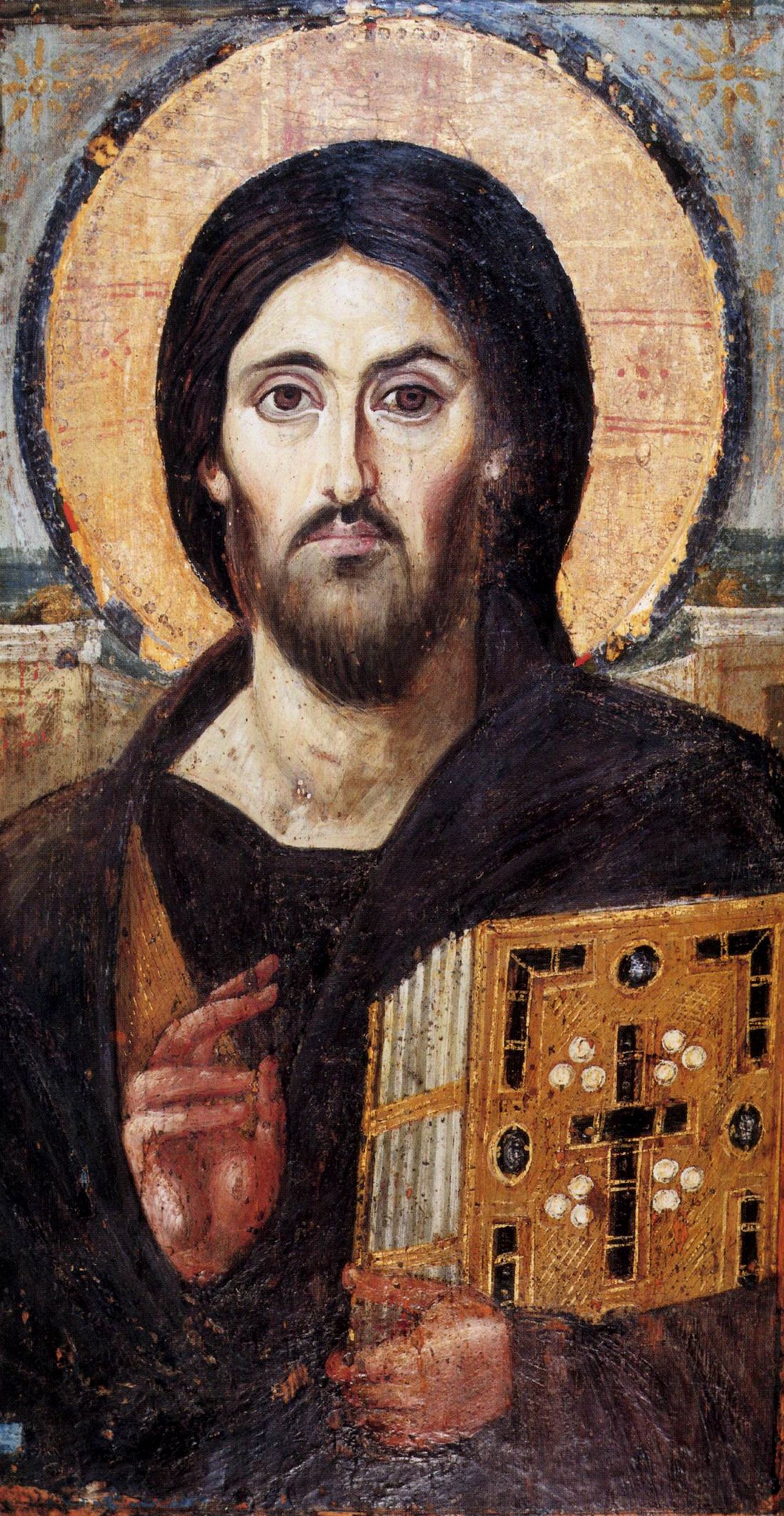 I ran across this posting over at the Creedal Christian. Here's a sample, but make sure you read the whole thing.
Jesus expressed his great love for people in ten dramatic ways. The gospels show us his immense compassion for the suffering, his attentive listening presence, and his energetic celebration of the lives around him. Here are ten ways Jesus demonstrated agape – the Greek word for unconditional, self-sacrificing love – and what we can learn from him.
1. The Way of Compassion
Jesus is depicted in the gospels as a healer who responded to the needs of the suffering even on the Sabbath and was roundly criticized for this by the authorities. He responded to those who would otherwise have been stoned to death. Compassion was perfectly captured in his parable of the Good Samaritan, a man who responded immediately and directly to a wounded man bleeding by the side of the road. Nothing could make him act in a way contrary to compassion – not a busy schedule or social stigma, as in the case of the Samaritan woman most others would not talk to. Jesus just did what compassion requires, whenever and wherever.
2. The Way of Attentive Listening
In interacting with others, Jesus was extraordinarily attentive, showing a humble willingness to respond in depth to what others had spoken. In his many healings, people cry out to him in need. Simply by listening and a touch, he offered them hope and wholeness. He listened carefully to his enemies and responded to them thoughtfully. He had immense patience with his disciples even when he had every reason to be impatient.
3. The Way of “Carefrontation”
Jesus was a master of caring confrontation. He practiced nonviolent resistance to evil, and it was his teaching and example that would inspire Gandhi and the great African-American Christian leaders of the civil rights movement. Jesus asked Peter to put down his sword; he said that those who live by the sword die by it. But he also confronted spiritual hypocrites and the many moneychangers who had set up shop in the Temple. He was constantly challenging people to think and act lovingly, and this meant that he had often to take the risk of confrontation when he saw destructive attitudes and behaviors around him.
Bishop Wolf offers resolution at the HoB meeting
Lots of resolutions will be under consideration by the House of Bishops, now meeting in New Orleans. It is reported over at Stand Firm (a conservative blog) that Bishop Wolf is among the signers of a letter and series of resolutions aimed at responding to the requests of many primates of the Anglican Communion.
Here is a sample:
Here is a sample:
RESOLVED, The House of Bishops of the Episcopal Church, mindful that it is the duty of a Bishop to order the public liturgy of the church in his or her diocese, undertakes and covenants not to authorize or permit any public Rite of Blessing for same-sex unions in our dioceses or General Convention (consistent with the resolution B020 of the 1991 General Convention and with the recommendations of the Windsor Report, and the teaching expressed in Resolution Bl0l of the 1994 General Convention,2 and in line with the standard of teaching commanding respect across the Anglican Communion, as most recently expressed in Resolution 1.10 of the 1998 Lambeth Conference),
RESOLVED, The House of Bishops, noting that the Executive Council in their resolution ECO1 1 accepted the report of the Communion Sub-group of the Joint Standing Committee of the Primates Meeting and the Anglican Consultative Council as a helpful evaluation of the 75th General Convention’s response to the Windsor Report, concur with the conclusion of that report, that the passing of Resolution B033 of the 75th General Convention means that a candidate for episcopal orders living in a sexual relationship outside of Christian marriage shall not receive the necessary consents, unless some new consensus emerges on these matters across the Communion; be it further
RESOLVED, that, in accord with the pledge of the House of Bishops given in March 20, 2007, and affirmed by the Executive Council in June 14 2007, the House of Bishops undertake to respond pastorally and provide for those groups alienated by recent developments in the Episcopal Church in a way acceptable to them and that enables the Primates to end all interventions. We commend to the Presiding Bishop a renewed consideration of the Pastoral Scheme proposed in the Dar es Salaam communiqué.
Bishop Wolf among eight 'episcopal visitors'
As you may know, the House of Bishops meeting is underway now in New Orleans. Yesterday, Bishop Wolf made the news when she was named as one of eight 'episcopal visitors' to provide pastoral care to dioceses that may not agree with the direction of the Episcopal Church as a whole.
You can read a longer article, but here's a snippet:
You can read a longer article, but here's a snippet:
[Presiding Bishop Katharine] Jefferts Schori has conferred with [Archbishop of Canterbury Rowan] Williams about the invitations, which she extended after a process of consultation with bishops in the Episcopal Church...
"All eight are true bridge-builders who empathize with the concerns and needs of dioceses that are struggling with the issues of the current time," Robertson said, adding that "while all are sympathetic to to these concerns, each is clear that the Presiding Bishop's ultimate goal is reconciliation."
The eight are active diocesan bishops Frank Brookhart of Montana, Dorsey Henderson of Upper South Carolina (based in Columbia, S.C.), John Howe of Central Florida (based in Orlando), Gary Lillibridge of West Texas (based in San Antonio), Michael Smith of North Dakota, James Stanton of Dallas, and Geralyn Wolf of Rhode Island, together with retired Connecticut Bishop Clarence Coleridge.
Robertson said all have agreed to serve as official "episcopal visitors" (the lowercase adjective referring generally to bishops and their ministries rather than the church's denomination), or to provide "Delegated Episcopal Pastoral Oversight" (DEPO), an option provided by the House of Bishops' March 2004 statement "Caring for All the Churches" and a concept affirmed by the General Convention in 2006.
Jefferts Schori's invitation to the eight bishops seeks to delegate the first of three primary canonical duties of the Presiding Bishop, that of visiting each of the Episcopal Church's 110 dioceses during each Presiding Bishop's nine-year term. The Presiding Bishop's other two principal canonical roles are to "take order" for ordaining and consecrating bishops, and to oversee certain disciplinary actions as needed.
The Presiding Bishop's invitation to the eight bishops "offers opportunities for dioceses to have an episcopal visitor other than herself," Robertson said.
"This gives dioceses the pastoral guidance and care they need while remaining faithful and loyal members of the Episcopal Church," he said. "It is also the Presiding Bishop's hope that at some point in the future she would be invited to visit these dioceses."
Welcoming guests
One of my favorite church blogs is running a series on welcoming visitors to churches. I encourage you to check out the blog, and read the whole series (it's still in progress). Here's a sample to get you started:
...for the first time in years I was being welcomed into a church rather than welcoming people into church. Unable to shake my church-planting mentality, I was particularly sensitive to the way churches approached visitors. After visiting a few different churches, I started to realize something: many churches have forgotten what it's like to go to a church for the first time.The reason for this seems obvious to me: pastors have been attending church for years. Before they became a pastor, most have received some sort of education while attending a church. In fact, before they even feel the call to the ministry, they have been attending church for years as well--in some cases, they even grew up going to church. All those years of faithful church attendance has groomed them to serve Christ’s church. At the same time, all those years form an insurmountable gap between now and the time they first darkened the door of a church.
Consequently, some churches make some very basic mistakes when they welcome a visitor. If they welcomed you to a dinner party like they welcome a visitor to their church you would never want to come over for dinner again. They are so glad to see you that they make an embarrassing scene. After shaking your hand they ignore you, leaving you to fend for yourself. They exclude you by talking about things you’ve never heard of. They even slip into the common jargon of their friends, leaving you out of the conversation altogether. On top of these faux pas, they forget that you are a little nervous to be there in the first place. Who would want to be at that party? Who would put themselves through that a second time?
That was from part one. Here's a snippet from part two:
What do you think is the most pressing issue for a first time visitor to your church? The doctrine? Now I am a doctrinal stickler, but I’m realistic enough to realize that most visitors don’t care much about this. The music style? Good music can give a great first impression--whether traditional or contemporary--but most visitors will just sing along with whatever you have. The sermon? While a sermon could definitely cause people to leave a church, I don’t think this is the most pressing issue for a first-time visitor. First-time visitors care most about not embarrassing themselves.
There are all sorts of things that can embarrass a church visitor. They might have dressed inappropriately--too formal or too casual. Their children might not know how to act “appropriately” in a church and end up embarrassing their parents. They might be put on the spot as an offering plate is passed to them by a stranger, who they feel is pressuring them to give. They might stand up at the wrong time in the service. They might sing out during the wrong part of a song because the church has a different arrangement than they are used to. The most detrimental embarrassing situation can come from a bad welcome, destroying an otherwise great first impression
Some churches work hard to make people feel welcome, but they undermine their efforts by making it impersonal. Some churches make all their visitors stand up in the middle of the service--a terrible choice considering how much most people fear standing up in front of crowds. I once visited a large church that apparently realized how awkward this made their visitors feel so they did the opposite and asked their members to stand. There I sat, surrounded by towering members in this intimidating church, each hanging over me as they offered me an obligatory welcome and handshake.
Tuesday, September 18
Bishop Wolf on the House of Bishops meeting
Dear Sisters and Brothers in Christ,
I write to you out of deep prayer for the life of our Episcopal Church and Anglican Communion.
The House of Bishops' meeting begins on Wednesday evening, September 19th, with the first two days spent in the honored company of Archbishop Rowan Williams, Primates from the Joint Standing Committee, and other invited guests.
Primarily, we are being called to offer a response to the Windsor Report (including an Anglican covenant), and the Primates' Communiqué from Dar es Salaam. Once the meeting adjourns, the Archbishop is to consult with other Primates to consider a response to our deliberations and resolutions, after which they will give us a timely response. In addition, we will discuss the MDG's, spend a day working in New Orleans, and visit neighboring parishes on Sunday morning.
On Wednesday, September 26th, I will arrive home about two hours before the regularly scheduled meeting of Diocesan Council, and will communicate with you as soon as I am able.
Please pray for me and all our bishops. I leave for this meeting with a deep sense of anxiety, and my prayers have been for wisdom and humility at a time when there seems to be growing entrenchment and self-righteousness. May we honor one another in the honor and glory that is God's gift through Jesus Christ.
May God bless all of us.
+Geralyn Wolf
I write to you out of deep prayer for the life of our Episcopal Church and Anglican Communion.
The House of Bishops' meeting begins on Wednesday evening, September 19th, with the first two days spent in the honored company of Archbishop Rowan Williams, Primates from the Joint Standing Committee, and other invited guests.
Primarily, we are being called to offer a response to the Windsor Report (including an Anglican covenant), and the Primates' Communiqué from Dar es Salaam. Once the meeting adjourns, the Archbishop is to consult with other Primates to consider a response to our deliberations and resolutions, after which they will give us a timely response. In addition, we will discuss the MDG's, spend a day working in New Orleans, and visit neighboring parishes on Sunday morning.
On Wednesday, September 26th, I will arrive home about two hours before the regularly scheduled meeting of Diocesan Council, and will communicate with you as soon as I am able.
Please pray for me and all our bishops. I leave for this meeting with a deep sense of anxiety, and my prayers have been for wisdom and humility at a time when there seems to be growing entrenchment and self-righteousness. May we honor one another in the honor and glory that is God's gift through Jesus Christ.
May God bless all of us.
+Geralyn Wolf
Thursday, September 13
You are Invited
The Right Reverend Geralyn Wolf,
XII Bishop of Rhode Island,
invites you to attend the
Seating of the Dean and the Installation of the Chapter and the Canons
The Very Reverend Harry E. Krauss, III
will be seated on
Sunday, September 16th
4:00 PM
Cathedral of St. John, Providence
The Reverend Canon John G. B. Andrew D.D., O.B.E., Rector Emeritus of Saint Thomas Church Fifth Avenue New York, will preach.
Reception in Synod Hall
XII Bishop of Rhode Island,
invites you to attend the
Seating of the Dean and the Installation of the Chapter and the Canons
The Very Reverend Harry E. Krauss, III
will be seated on
Sunday, September 16th
4:00 PM
Cathedral of St. John, Providence
The Reverend Canon John G. B. Andrew D.D., O.B.E., Rector Emeritus of Saint Thomas Church Fifth Avenue New York, will preach.
Reception in Synod Hall
Subscribe to:
Posts (Atom)